What spaces make up a theatre?
Theatres are complex buildings, made up of many elements, which need to be planned carefully. Today there are many different types of theatre building but they will all contain some of the elements listed below.
Front of house
Front of house describes the parts of the theatre that the audience has access to. Audiences enter a theatre via a foyer. The foyer contains a box office where tickets may be purchased or collected.
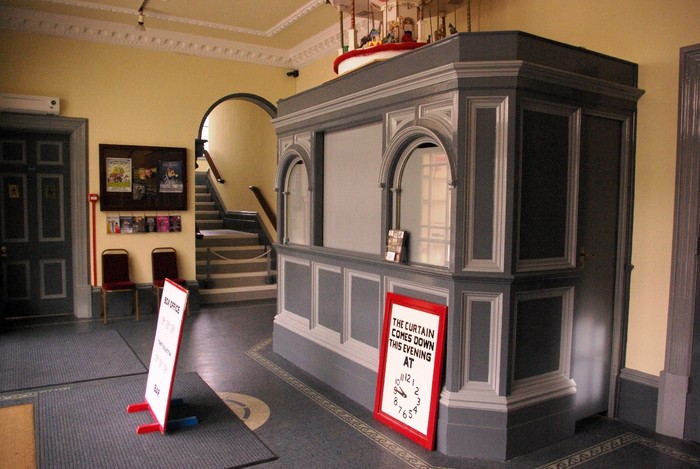
Foyer and box office at the Shanklin Theatre, Isle of Wight
Most theatres will have: a café or bar where drinks and food may be purchased before the performance and during the interval, toilets which are an essential element of all theatres to keep patrons comfortable, and a cloakroom to leave bags and coats in. Some theatres have a merchandise stall or shop where memorabilia for the show or theatre may be purchased. These spaces are the first point of engagement for most audiences and experiences here will have as much of an effect on how they view their visit as the performance itself.
The audience enters the auditorium via corridors with doors known as vomitories. The auditorium (also known as the house) is where the audience sits to watch the performance. The seating may be at one or more levels depending on the size and type of theatre. The first level of seating directly in front of the stage, generally starting below stage level and slowly rising as it reaches the back of the auditorium, is known as the stalls. The rear of the stalls may be overhung by a balcony with further tiered seating commonly known as the dress circle or grand circle. This may curve round the sides of the auditorium to individual boxes close to the stage which generally fit between two and six people. These were originally built as private seating for the very rich as their occupants could be seen by everyone else in the auditorium. They are less used today as they don’t always have a good view of the stage. Some theatres will have further balconies and boxes above the first balcony, but rarely more than three balconies in total. The second balcony is known as the upper circle and the top level of seating is known as the gallery or the gods.
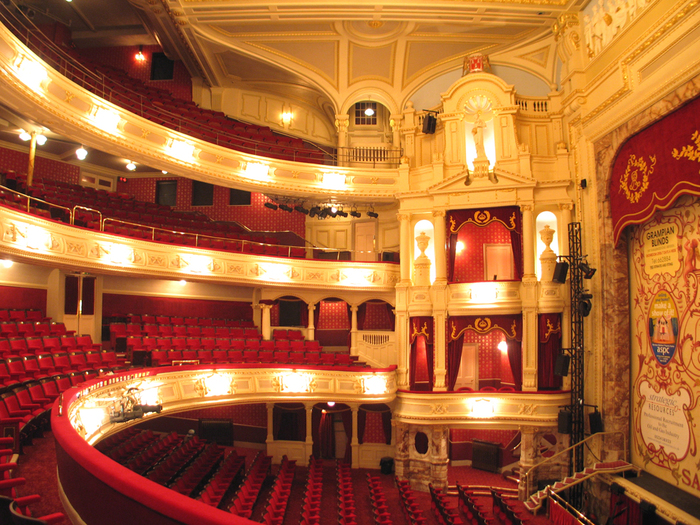 His Majesty's Theatre, Aberdeen, showing the stalls, balconies, boxes to stage right and part of the proscenium arch and safety curtain
Many British theatres contain a proscenium arch which is the frame around the stage, dividing the auditorium from the backstage areas. It is also the name for the type of theatre that has this frame in it. A proscenium arch theatre is what many people think of as a traditional theatre space which developed from the Victorian trend of wanting to view a production through an ornate picture frame. It will contain two curtains, one of cloth which generally lowers from above the arch backstage to hide the set until the performance begins. This is known as the house curtain. A metal curtain known as the iron or safety curtain is a fire safety device used to separate the auditorium and stage in the event of a fire.
Backstage
Traditionally, this is the areas behind the proscenium arch, out of the sight of the audience. It includes technical, performance and preparation areas of the theatre behind, beside, above and underneath the stage. It also includes areas in sight of the audience such as the control box, usually located at the back of the stalls, where the control desks for lighting and sound are situated.
The stage is the area where the performance takes place. In a proscenium arch theatre the stage usually projects in front of the arch itself. This area is known as the apron or forestage. Immediately in front of the stage, or sometimes partly underneath the apron, is the orchestra pit, a sunken area from which the orchestra plays. The stage is broken up into areas known as stage left and stage right and upstage and downstage. Stage left and stage right are from the perspective of the performer on stage and are therefore the reverse for those sat in the audience. Upstage refers to the area closest to the rear wall of the stage, furthest from the audience and downstage refers to the area closest to the audience and the front of the stage and apron. These terms come from a time when stages were raked, meaning the stage slowly rose on an incline with the back of the stage area being higher (up) than the front of the stage (down). Some stages in theatres around the UK are still raked.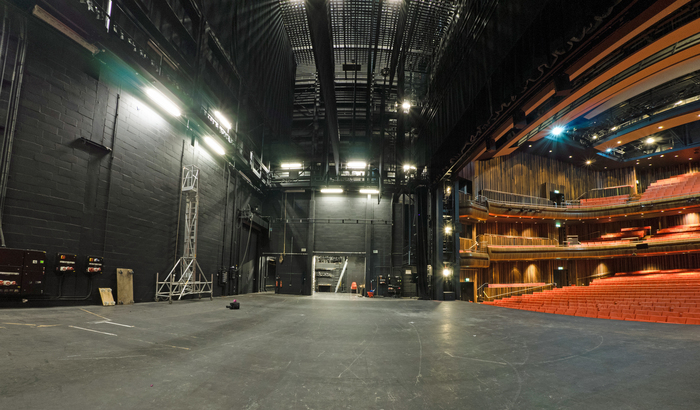
View across the stage towards stage left in the auditorium at the Marlowe Theatre, Canterbury.
The stage extends into the areas either side which are known as the wings because of the fabric or built dividers which allow performers to enter and exit the stage without being seen by the audience. It is also where large props and set are stored when not used and where quick changes might take place if there isn’t time to use a dressing room. Prompt corner is usually also located in the wings on stage left. From here the show caller (a member of the stage management team) calls the lighting, sound, other technical changes and cast movements over a headset which connects them to the dressing room, green room and control box. Sometimes the show caller will be in the control box with the technical operators as it has a better view. Once in the wings cast and crew can then move further backstage to dressing rooms and other backstage areas.
Stored in the wings and used on the stage, the set or scenery helps to set the scene for a performance. This is individual to each production and can be in a fixed position or brought on stage by hand or using stage technology. There are many different forms of stage technology which can be used to move or alter the set including a revolve which turns to allow different sets to be seen, wheeled platforms known as trucks, automated track systems, audio visual (AV) projection and hydraulic elevators.
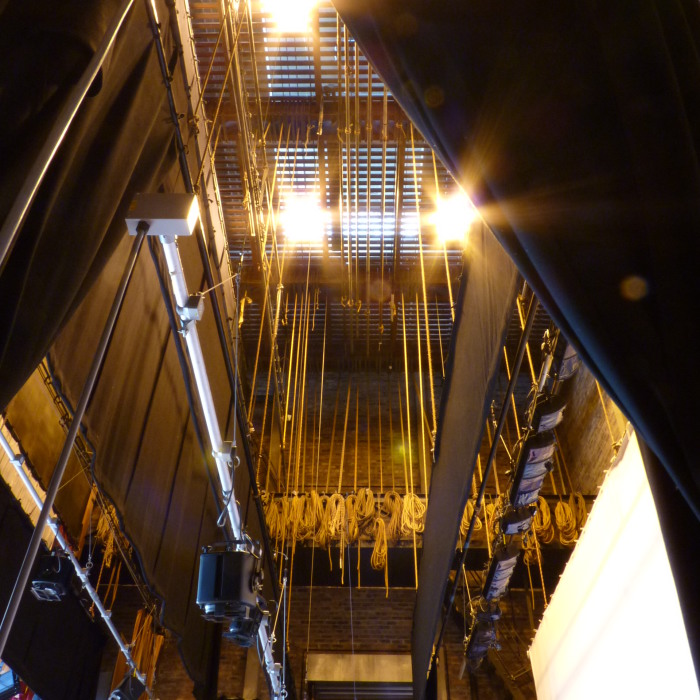 The grid at the Queen's Hall, Dunoon
The space above the stage is known as the fly tower and grid. This is the area directly over the stage, which is at least one and a half times the height of the proscenium arch. Bars are used by all departments including set, lighting, sound and AV to rig elements such as lights, speakers and drapes. Most are rigged and then left in a fixed location however set elements in particular may be ‘flown’ in and out (with the bars moving up and down) to move these elements in and out of the audience’s view as they are needed for a scene. Occasionally performers are ‘flown’ as well. A black drape (curtain) usually hangs in front of the back wall of the stage which allows cast and crew to hide from site whilst moving around backstage. This frequently has a white cloth (stretched curtain) in front of it known as a cyclorama which can be projected on by lighting and AV to provide the background for the scenes onstage. Other cloths rigged from the bars include painted cloths particularly used in ballet, musicals, opera and pantomimes.
The dock is the rear entrance to the theatre where trucks unload all the sets, costumes and technical equipment for each performance and take them away at the end. The setting up and taking down of the set, lighting and sound are known respectively as the ‘get in’ and ‘get out’. Stage door is also at the rear of the theatre where all staff, cast and crew enter.
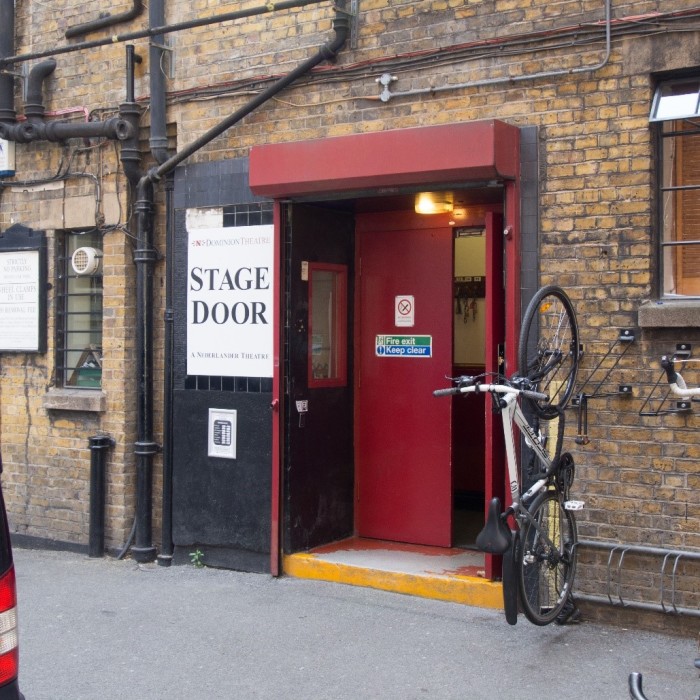 Stage door at the Dominion Theatre, London
Other spaces backstage include spaces for crew and performers to prepare or relax before or during a performance. Dressing rooms are where performers dress and get ready for the show. Dressing room mirrors have lights that surround them to simulate the lighting conditions on stage. The green room is a space where performers and crew can eat or relax. There might be a separate band room, for the members of the band/orchestra to wait when they are not required in the orchestra pit. Some theatres will have a rehearsal room where performers can warm up before performances or rehearse as a company during both the rehearsal and performance periods.
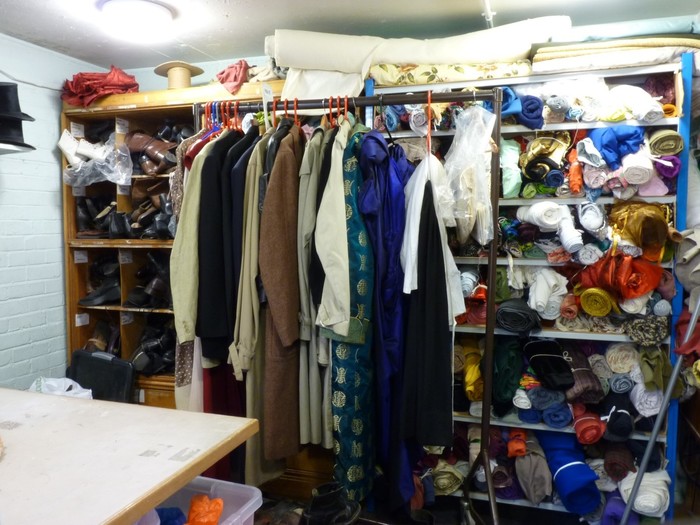 Wardrobe workroom at the Questors Theatre, Ealing.
The last set of spaces backstage are those for the maintenance of all the equipment and elements used during performances. Wardrobe is the general term for the costume department, as well as the spaces where costumes are made and stored. The wardrobe also includes other functions such as the wig room and the laundry. There will also be a range of workshops. Most theatres will have some form of technology workshop where lighting, sound and AV equipment owned by the venue is maintained and may be stored. Larger theatres may also have a workshop where props, set and scenery are constructed and maintained.
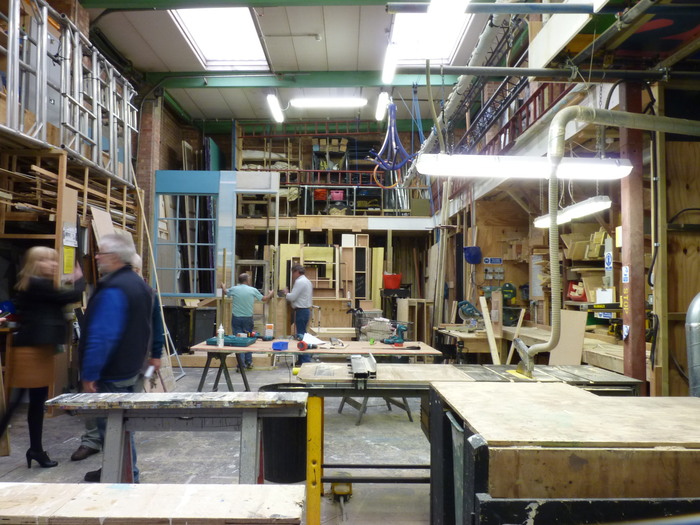 Image showing a workshop at the Questors Theatre, Ealing.
Images: Shanklin Theatre Trust, Ian Grundy, Theatres Trust.